
Consumer Choice Pricing allows a merchant to establish a cash price and a card price before the customer chooses how to pay.
A surcharge works differently. It begins with an advertised price and adds a separate charge because the customer uses a particular payment method.
The difference is not simply what the program is called. It depends on how prices are displayed, calculated and processed.
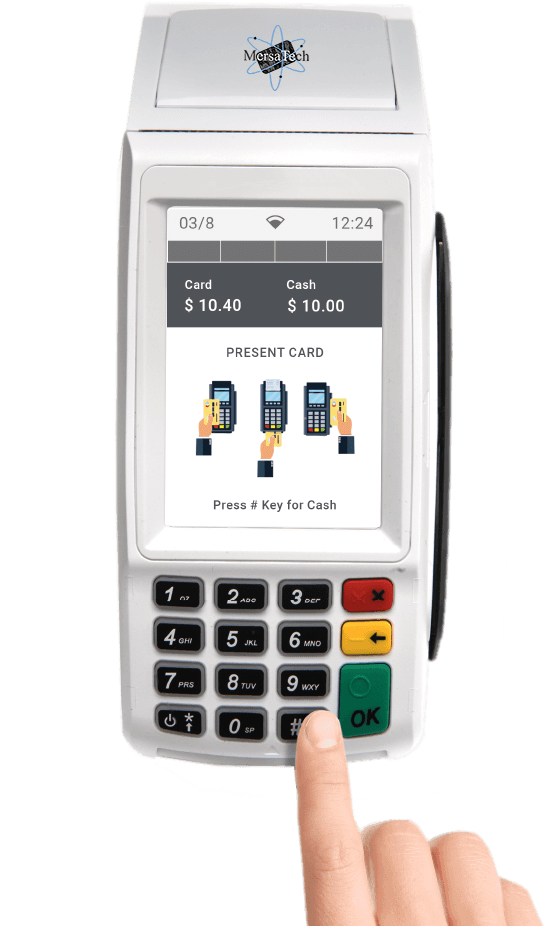
| Payment option | Displayed price |
|---|---|
| Cash price | $97.00 |
| Card price | $100.00 |
The customer selects a payment method and pays the corresponding displayed price. No fee is added at checkout.
| Transaction | Amount |
|---|---|
| Advertised card price | $100.00 |
| Cash discount | -$3.00 |
| Cash customer pays | $97.00 |
| Card customer pays | $100.00 |
The discount may be calculated at checkout, but it should be communicated before the customer authorizes payment.
Visa’s published guidance permits merchants offering a cash discount to display either the card price alone or the cash and card prices side by side. The final card total should come from the displayed prices—not from adding a card fee at payment.
The card price applies consistently to all accepted card payment types.
Payment option |
How it works |
|---|---|
| Consumer Choice / Dual Pricing | Complete cash and card prices are established before payment |
| Advertised Card Price With Cash Discount | The card price is advertised and cash customers receive a discount |
| Credit Card Surcharge | A separate charge is added to eligible credit card transactions |
| Debit Card Surcharge | A separate charge is added because the customer uses a debit card |
A receipt description such as “service fee,” “processing fee” or “non-cash adjustment” does not determine the pricing model. The actual pricing and checkout process are what matter.
Effective August 1, 2026, Louisiana Act 751 prohibits retail businesses from imposing a surcharge on customers who use a debit card. The law defines a surcharge as an additional amount imposed at the time of the transaction that increases the customer’s charge for using a debit card.
A debit card remains a debit card even when the customer selects “credit” at the terminal or completes the transaction without entering a PIN. Visa also prohibits surcharges on debit and prepaid cards.
Act 751 does not expressly prohibit a genuine cash discount or properly disclosed Consumer Choice Pricing. However, the law does not provide a specific safe harbor for programs described as dual pricing or Consumer Choice.
Merchants should focus on how the program actually works:
Are the complete cash and card prices disclosed before the customer chooses how to pay?
When only one price is advertised, is it the complete card price?
Is the cash discount clearly disclosed and actually deducted from the advertised card price?
Does the system charge an established card price, or does it add a separate amount to a lower advertised price?
Does the Consumer Choice card price apply consistently to all accepted card payment types?
When the merchant operates an actual credit card surcharge program, can the system reliably exclude debit and prepaid cards?
Do the receipts accurately reflect the pricing model being used?
Do the signs, menus, shelves, invoices, estimates and online price displays match the terminal pricing?
Can employees accurately explain the cash price, card price, cash discount and surcharge?
Has the merchant reviewed the requirements applicable to every state in which it operates?
Act 751 does not expressly ban Consumer Choice Pricing, dual pricing or bona fide cash discounts.
It prohibits an additional amount imposed at the time of a transaction that increases the customer’s charge for the privilege of using a debit card. Whether a specific program complies depends on how the prices are established, disclosed and processed.
The card price should apply consistently to all accepted card payment types.
Consumer Choice Pricing is based on the customer selecting between an established cash price and an established card price. It is not limited to one specific type of card.
Yes. The merchant may advertise the complete card price and calculate the disclosed cash discount when the customer selects cash at checkout.
The opportunity to receive the cash discount should be communicated before payment, and nothing should be added when the customer uses a card.
Visa’s published guidance allows merchants offering a cash discount to display only the card price per item or to display the card and cash prices side by side.
Yes. Displaying the complete cash and card prices side by side is one of the clearest ways to communicate Consumer Choice Pricing.
The customer chooses a payment method and pays the corresponding displayed price.
A sign can help explain the program, but relying only on a general sign may create risk when the applicable prices are not otherwise disclosed.
The complete card price should be available through the merchant’s applicable menus, shelves, price lists, invoices, estimates or checkout screens before payment.
Changing the name does not necessarily change the nature of the charge.
If an additional amount is imposed because a customer uses a debit card, it may still be treated as a debit card surcharge.
No. Selecting “credit” does not change the debit card into a credit card. Visa expressly states that a Visa debit card cannot be surcharged even when the customer selects “credit” at the terminal.
Louisiana Act 751 specifically addresses debit card surcharges. It does not independently prohibit all eligible credit card surcharges.
However, any credit card surcharge must comply with applicable state law, card-brand rules, disclosure requirements, surcharge limits and processor requirements.
The same underlying pricing distinction remains important.
Customers should receive the complete applicable price before being asked to authorize the payment.
Merchants should work with their processor and point-of-sale provider to confirm how their pricing, equipment, receipts and disclosures operate.
A merchant should not assume that a program complies merely because it was installed or configured by another company.


If you wish to receive our latest news in your email box, just subscribe to our newsletter. We won’t spam you, we promise!
© MersaTech, LLC is a registered Independent Sales Organization of KeyBank, N.A., Cleveland, OH
MersaTech, LLC is a registered ISO for Fifth Third Bank, N.A. Cincinnati, OH, USA.
MersaTech, LLC is a registered ISO of Citizens Bank, N.A., Providence, RI.
Mersatech, LLC is a registered ISO of PNC Bank, N.A., Pittsburgh, PA -Member FDIC
MersaTech, LLC is a registered ISO of Esquire Bank N.A., Jericho, NY.